
Risk of destruction of sports heritage; UNESCO calls for documentation

Dr. Hassan Fartousi, Secretary‑General of the Iranian National Commission for UNESCO, at the meeting on sports community activism, expressing concern over the destruction of sports and cultural facilities, emphasized the necessity of protecting these national assets and the supportive role of UNESCO in documenting and rebuilding them.
Risk of destruction of sports heritage; UNESCO calls for documentation
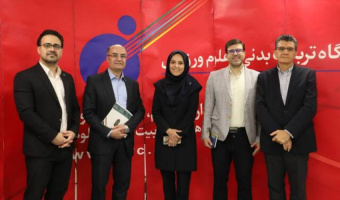
According to the Public Relations Department of the Institute of Physical Education and Sport Sciences, Dr. Hassan Fartousi, Secretary‑General of the Iranian National Commission for UNESCO, at the meeting on sports community activism regarding the management of the effects and consequences of war on sports facilities and programs, pointed to the destruction of sports and cultural facilities and emphasized the importance of these spaces as national assets and UNESCO's role in documentation, awareness‑raising, and support for reconstruction.
In this meeting, he examined various dimensions of the importance of sports facilities and the responsibilities of the National Commission for UNESCO regarding the damages inflicted on these centers.
Dr. Fartousi stated: "The destruction of structures and educational infrastructure, including sports halls and cultural centers, is a catastrophe. These places are not merely classrooms; they have a significant impact on the physical and mental health of individuals." He added that sports clubs are like second homes for many young people, and their closure or destruction is very concerning, especially given the role of sport in creating national identity, unity, and hope.
Referring to the terms "Sport for All" and "International Day of Sport for Development and Peace" at UNESCO, he emphasized the importance of sport on a global level. Dr. Fartousi added: "UNESCO, in cooperation with international agencies, has designed emergency sports programs to help affected populations, and sports facilities are also used as temporary shelters during crises."
Dr. Fartousi stated: "According to unsubstantiated reports, a large number of sports facilities have been attacked in the recent war." He added that UNESCO requires documented and illustrated reports of the damages — similar to those received from the Ministry of Education and the Ministry of Science — in order to convey this information to international organizations. He emphasized that his colleagues are working around the clock to collect this documentation.
Regarding UNESCO's post‑war support, Dr. Fartousi cited examples such as Bosnia and Herzegovina and Iraq, where UNESCO has played a role in rebuilding facilities. He noted that the prerequisite for such support is the precise documentation of damages, and that this information must reach UNESCO by any means, even outside formal administrative procedures.
He also referred to the concept of "peace" at UNESCO, stating that peace does not only mean international peace, but also inner peace and the reduction of violence and tension within society. Dr. Fartousi expressed hope that through the capacity of sport, social divides could be reduced and existing tensions in society could be channeled in a more constructive direction.
In conclusion, Dr. Fartousi thanked the professors for their remarks and referred to the speech of the Secretary‑General of the National Olympic Committee. He emphasized the need for more organized communication between sports institutions and the National Commission for UNESCO and declared his full readiness for any cooperation. He added that a body of international law must be produced in this field and the documentation must be widely published so that the voice of the oppressed Iranian nation reaches the world.
Your Comment :