
Hosted by the Institute of Physical Education: Specialized Symposium 'An Inquiry into the Identity and Resilience of Iranians' Held

The Institute of Physical Education and Sports Sciences, in collaboration with the Zurkhaneh and Pahlevani Wrestling Federation, held a specialized symposium titled 'An Inquiry into the Identity and Resilience of Iranians' on the occasion of April 6 (17 Farvardin) — National Pahlevani Culture and Zurkhaneh Sports Day.
Specialized Symposium 'An Inquiry into the Identity and Resilience of Iranians' Held
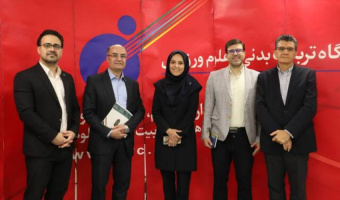
According to a statement from the Public Relations Office of the Institute of Physical Education and Sports Sciences, this academic symposium — titled 'An Inquiry into the Identity and Resilience of Iranians: Iranian Pahlevani Culture, War, and Global Unethicality' — aimed to examine the identity and ethical dimensions of Iranian society in the context of contemporary developments from a scientific and interdisciplinary perspective. The event was attended by a group of professors, researchers, students, and enthusiasts in the fields of sport and culture.
At the beginning of the symposium, Dr. Fariba Mohammadi, Director of the Institute of Physical Education and Sports Sciences, commemorated the memory of the martyrs and welcomed the attendees, expressing gratitude to the guests and speakers of the symposium.
In her remarks, she referred to the scientific and social mission of the Institute, stating that the Institute had previously played an active role in addressing contemporary issues at critical junctures — including a session focused on 'The Activism of the Sports Community in the Destruction of Sports Facilities,' which emphasized the responsibility of elites in confronting difficult events.
The Director of the Institute posed the question of whether the field of sports sciences could provide answers to the 'macro-ethical' crises of the world. She noted that in the realm of sport — particularly in Iran's indigenous traditions — we encounter the concept of 'Pahlevani,' which is not merely a physical skill but rather an anthropological model.
She continued: "In a world where violence is being normalized, double standards in global ethics are spreading, and human dignity is interpreted selectively, the serious question arises whether Pahlevani culture can be used as a theoretical and practical framework for the reconstruction of ethics."
Iranian Identity is the Product of the Bond Between Iraniyat and Spirituality
Later, Hojjatoleslam val-Muslemin Dr. Abdolhossein Khosropanah, Secretary of the Supreme Council of the Cultural Revolution, discussed the roots of Iranian identity, stating: "Iranian identity is the product of the long-standing bond between Iraniyat (Iranianness) and spirituality — an identity that has passed through difficult events throughout history and has been shaped by chivalry, magnanimity, Pahlevani, and ethics." He added that Pahlevani is not merely a sport but an ethical way of life that can help strengthen self-confidence, social cohesion, and cultural flourishing in society.
The Need to Strengthen Pahlevani Culture Among the Younger Generation
Mehr Ali Barancheshmeh, Head of the Zurkhaneh and Pahlevani Wrestling Federation, also emphasized the need to expand Pahlevani culture in society, stating that the promotion of this culture is rooted in Iran's history and culture and must be strengthened, especially among the younger generation. He referred to the model of chivalry in Islamic culture, citing the battle of Imam Ali (AS) against Amr ibn Abd Wudd during the Battle of the Trench as an example of the pinnacle of chivalry and sincerity. He noted that in the contemporary era, world champion Gholamreza Takhti remains in the historical memory of the Iranian people because of his principles and his help to others — not merely because of his sports medals.
Zurkhaneh is a School for Cultivating Spirit and Ethics
Dr. Ali Akbar Imani, Deputy for Cultural and Social Affairs at Kharazmi University, also spoke about the cultural standing of Zurkhaneh sports, saying that Zurkhaneh is not merely a physical activity but a school for cultivating spirit and ethics. He emphasized that values such as humility, magnanimity, chivalry, and helping those in need are transmitted to the younger generation through this culture. Practices such as beginning exercise in the name of God, showing respect to the mentor and veterans, and ending with prayer demonstrate the deep connection between this sport and culture and spirituality.
Today's Society Needs Solidarity More Than Ever
Zahra Nemati, Paralympic champion and head coach of the national para-archery team, spoke about the need for empathy and patience in today's society, stating: "Today's society needs dialogue, solidarity, and patience more than ever." She added that Pahlevani is not only defined in sports competitions but also manifests in caring for one another, maintaining mutual respect, and hoping for a bright future for Iran. She stated that the true power of a society lies in its people standing together.
The New Generation's Growing Distance from Pahlevani Heritage is a Warning Sign
Dr. Mohammad Mehdi Rahmati, Professor of Sports Sociology at the University of Gilan, spoke about the ethical nature of Pahlevani culture, stating that Pahlevani culture in Iran is based more on virtues such as courage, moral bravery, sacrifice, forgiveness, and people-centeredness than on physical strength. He added that this tradition is rooted in religious and epic teachings, inspired by the conduct of Imam Ali (AS) and the narratives of the Shahnameh, and is manifested in Zurkhaneh sports as a fusion of Iraniyat and Islamiyat. Rahmati also noted that the new generation's growing distance from this cultural heritage is a serious warning sign, emphasizing the need for coordinated efforts by the family, educational system, media, and cultural institutions to redefine and transmit Pahlevani values to today's generation.
Aligning Pahlevani Sport with the Tastes of the Youth
Dr. Seyyed Mohammad Bathaei, Deputy Minister of Interior and Head of the Social Affairs Organization of Iran, addressed one of the major challenges facing Pahlevani sport: declining interest among young people and adolescents. He stated that if we want this cultural and ethical heritage to remain alive in society, we must reconsider its techniques, teaching methods, and training programs. He added that the methods of this sport need to be updated in line with the needs and tastes of the new generation so that young people and adolescents find greater motivation to attend zurkhanehs.
In the Iranian School, War is the Last Resort for Restoring Justice and Reconciliation
Mousa Akrami, Professor of Philosophy at Islamic Azad University, delivered a lecture titled 'The Iranian School of Peace and the Ethics of War in Pahlevani Tradition,' emphasizing that in the Iranian tradition, the natural state of human life is 'reconciliation' and harmony with the justice-oriented order of the world, with war accepted only as an exceptional and unavoidable condition. According to him, in this school, war is justified only when all paths to peace have been tried, and its goal is the defense of justice.
Akrami added that even during war, violence must be constrained by ethical principles — avoiding harm to civilians and purposeless destruction, and treating wounded or surrendered enemies with respect.
He noted, referring to the tradition of Pahlevani and the letters of chivalry (fotowwat-namahs), that the ultimate goal of war in Iranian thought is not victory or domination but the restoration of peace and a just order. After the end of the war, the groundwork for lasting reconciliation must be laid by rebuilding relationships, repairing people's lives, and preserving the human dignity of the other side.
Your Comment :