
The President of the Institute of Physical Education and Sports Sciences, emphasizing the strategic role of intellectual property in the development of the sports industry, stressed the necessity of moving toward deep and technological innovations in this

President of the Institute of Physical Education Emphasizes the Strategic Role of Intellectual Property in the Development of the Sports Industry
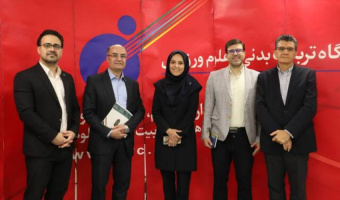
According to a statement from the Public Relations Office of the Institute of Physical Education and Sports Sciences, the ceremony was attended by managers of the National Organization for Civil Registration of Documents and Real Estate, officials of the Intellectual Property Center, a group of professors, inventors, and activists in the field of sports technology.
During the ceremony, Dr. Fariba Mohammadi, President of the Institute of Physical Education and Sports Sciences, while commemorating the memory of the country's martyrs, referred to the growing importance of intellectual property in the sports industry and stated: "Today, sport at the global level has become a knowledge-based and innovative industry. Intellectual property, beyond its protective role, has become an engine for value creation and competitive advantage in this field."
Referring to the Institute's position as the only specialized sports sciences research institution under the Ministry of Science and the country's scientific authority on sport, she added: "Since 2013, a total of 972 sports patent applications have been evaluated at the Institute, of which 613 cases (63 percent) were in the field of grassroots sports and 359 cases (37 percent) in the field of elite sports."
According to Dr. Mohammadi, of these, 30 percent (343 cases) were accepted and 70 percent (629 cases) were rejected. These evaluations were conducted based on three main criteria: novelty, inventive step, and industrial applicability.
The President of the Institute of Physical Education and Sports Sciences, emphasizing that more than 80 percent of the rejected cases were due to weaknesses in articulating the 'inventive step,' stated that this indicates the necessity of improving intellectual property literacy among activists in the sports field.
She then referred to global trends based on reports from the World Intellectual Property Organization (WIPO), stating: "The annual growth rate of sports patent registrations worldwide has reached 7.6 percent, while the figure for all patents is 4.4 percent. This shows that innovation in sport is progressing at nearly double the pace."
The President of the Institute of Physical Education and Sports Sciences continued: "Global innovation in sport has shifted toward smart technologies, performance data analytics, artificial intelligence, advanced equipment, and digital sports. However, in our country, the focus remains largely on physical equipment, indicating a technological gap with global trends."
The President of the Institute identified four main challenges in this area: a gap in data-driven technologies, weakness in deep innovation, limited diversity of fields, and challenges in commercialization.
Referring to the Institute's actions in this field, she said: "Utilizing a network of 73 specialized evaluators, holding joint training courses with the Intellectual Property Center, launching an innovation center, and establishing 19 startups and knowledge-based companies are among the Institute's actions toward developing the sports innovation ecosystem."
In conclusion, Dr. Mohammadi emphasized the necessity of improving intellectual property literacy, directing research toward modern technologies, and strengthening the link between academia and the sports industry. She added: "To compete effectively on the global stage, we must move beyond superficial innovations and move toward creating smart ecosystems based on data and technology."


Your Comment :