
Specialized Symposium on 'Football Leadership in Crisis' Dr. Mohammadi: In Times of National Crisis, Football Can Be a Tool for Rebuilding Social Capital and Strengthening Collective Hope

According to a statement from the Public Relations Office of the Institute of Physical Education and Sports Sciences, Dr. Mohammadi, while honoring the memory of the proud martyrs of our dear country and wishing lasting peace and security for Islamic Iran, stated:
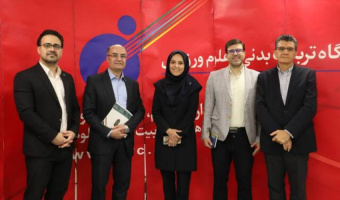
"At the outset, I extend a warm welcome to the esteemed veterans and distinguished activists in the field of football: Dr. Hamidreza Asefi, former spokesperson and deputy minister of foreign affairs; Dr. Hooshang Nasirzadeh, former CEO of Tractor and Foolad Khuzestan clubs and legal advisor in football; Mohammad Espandiarpour, CEO of Gol Gohar Club and member of the board of directors of the Football Federation, who is with us virtually; Dr. Sadegh Raeisi Kia, former CEO of Rah Ahan Club and sports law specialist; esteemed professor Dr. Alireza Elahi, head of the Strategic Committee of the Football Federation; Seyyed Mohammad Rasool Bakhtar, attorney-at-law and legal specialist; and also Dr. Saeed Shafiei, Deputy Director General of the Education and Culture Office of the Parliament's Research Center, members of the Sports Working Group of this center, my deputies, managers, and dear colleagues at the Institute of Physical Education and Sports Sciences. I am grateful for the presence of all these esteemed individuals at this cordial symposium."
She added: "I respectfully ask permission from the elders and veterans present in this meeting — the true owners of this field — to speak for a few minutes about football from a research and policy perspective."
Mohammadi emphasized: "I wish to stress that today, sport is not merely a recreational or competitive field; it is part of the country's social and cultural system."
The President of the Institute of Physical Education and Sports Sciences stated: "The Institute of Physical Education and Sports Sciences, within this same framework, has oriented its movement toward mission-driven and problem-oriented approaches. This means we believe that knowledge production is valuable only when it can help solve the real problems of society. Previously, symposia such as 'The Activism of the Sports Community Regarding the Destruction of Sports Facilities,' 'An Inquiry into the Identity and Resilience of Iranians Against Global Unethicality and Double Standards,' have been held at the Institute with the presence of prominent figures in this field. Today, one of the most important issues of public and specialized discourse in the country is the subject of football."
Dr. Mohammadi noted: "In post-war conditions or periods of national crisis, football is not merely a match; it can function as a tool for rebuilding social capital, strengthening collective hope, and creating a sense of continuity in daily life. For this reason, the question of whether or not to participate in events such as the World Cup is not merely a technical or sporting decision; it has cultural, psychological, social, and even diplomatic dimensions."
She continued: "Both approaches — participation or non-participation — naturally have their own consequences and considerations. In terms of benefits, participation in international events can have several important functions: first, creating a sense of return to stability and normalizing the public atmosphere of society; second, strengthening social cohesion and national identity around a shared symbol; third, maintaining the international standing and credibility of the country's sport and preventing symbolic isolation; and fourth, providing a soft channel for public diplomacy and demonstrating national resilience."
Regarding the league, the President of the Institute of Physical Education and Sports Sciences said: "Apart from the executive and technical discussions about whether or not to continue competitions, attention must be paid to the public role of the league. Professional leagues around the world are not merely producers of matches; they are part of the social rhythm of society. Weekly competitions create a sense of structure, healthy entertainment, emotional release, and a sense of collective belonging for many people. Long-term suspension of this cycle can lead to a decline in social vitality, an increased sense of uncertainty, and a weakening of certain collective bonds."
She stated: "The experience of various countries also shows that during periods of crisis, professional sport has often continued — albeit with changes in the format of execution — with efforts made to maintain continuity. In many countries, even during wars, security crises, or pandemics, the principle has been to maintain a minimum level of sporting activity as part of the mechanism of social resilience."
She added: "The purpose of holding this symposium is precisely to enter this level of analysis — that is, to examine football not merely as a sport, but as an influential social phenomenon, decision-making about which requires a multi-dimensional perspective, evidence-based approach, and consideration of national interests."
Mohammadi added: "The Institute of Physical Education and Sports Sciences is ready, by playing its scientific and advisory role, to contribute to better decision-making in this field through the production of policy reports, future studies, and socio-sport analyses."
She continued: "In this regard, we consider the presence of Dr. Saeed Shafiei, Deputy Director General of the Education and Culture Office of the Parliament's Research Center, a great opportunity. Fortunately, the foundations of cooperation between the Institute and the Research Center have been established for years, and we hope these interactions will expand day by day and develop in the form of operational projects, joint studies, and executive proposals. Today's complex issues of the country, more than ever, require synergy between scientific institutions and policy research centers."
The President of the Institute concluded by expressing hope: "I hope that the outcome of this symposium can contribute to the formation of a more precise, more rational discourse on football, one based on the long-term interests of the country."
Your Comment :