
On the Occasion of Public Relations Day and the Launch of the National Scientific Communications Network for Sport; A Major Step by the Institute of Physical Education and Sports Sciences / National Media Network of the Sports Sciences Family Established
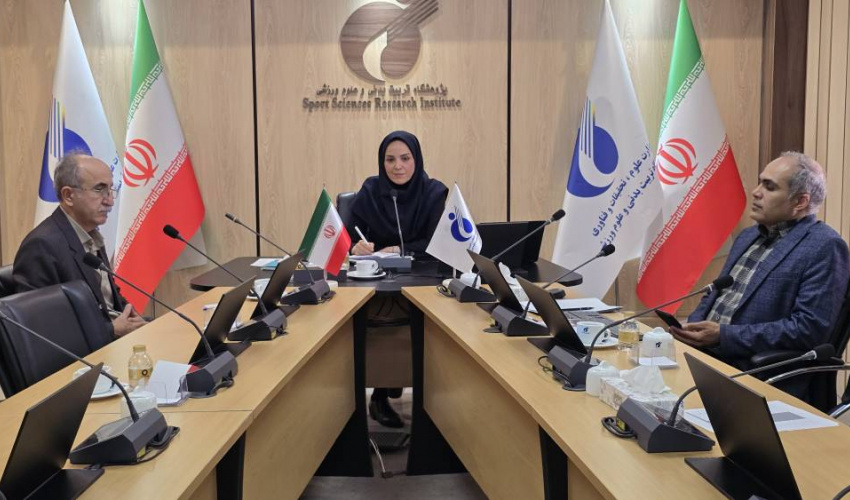
In a cordial virtual meeting of public relations directors from sports sciences faculties and departments across the country, hosted by the Institute of Physical Education and Sports Sciences, the 'National Scientific Communications Network for Sport' was established. Participants emphasized the necessity for academics to play an active role at critical decision-making junctures for the country's sports.
A Major Step by the Institute of Physical Education and Sports Sciences / National Media Network of the Sports Sciences Family Established
According to a statement from the Public Relations Office of the Institute of Physical Education and Sports Sciences, during this virtual meeting attended online by public relations directors of sports sciences faculties and departments across the country, Dr. Shariatzadeh, while congratulating the occasion of Communications and Public Relations Day on May 17 (27 Ordibehesht), expressed gratitude to the attending directors and representatives. He stated: "In today's world, public relations is no longer merely an information dissemination unit, but the beating heart of scientific communications and the main connecting link between the sports sciences family and society and the sports field, playing an important role in shaping discourse in this area."
He further elaborated on the strategic objectives of the meeting, stating: "The Institute of Physical Education has organized this event with the aim of creating a 'National Scientific Communications Network for Sport' to connect all educational, research, and technological capacities within the sports sciences family through a cohesive and dynamic structure, thereby maximizing the impact of this scientific family on society."
The Deputy for Cultural and Social Affairs of the Institute noted: "In this meeting, we will benefit from the presence and valuable experiences of Dr. Ali Rabiei, head of the Association for Cultural and Communication Studies, as well as the remarks of Dr. Fariba Mohammadi, President of the Institute. We hope that by relying on this knowledge and management experience, we can take effective steps toward scientific and specialized synergy in the country's sports field."
The Sports Environment Is Vital for Preserving the Mental Integrity of Iranians
Subsequently, Dr. Ali Rabiei, head of the Iranian Association for Cultural and Communication Studies, elaborated on the challenges and modern functions of public relations in academic and sports fields during the virtual meeting of the 'National Scientific Communications Network for Sport' held on the occasion of Communications Day. Criticizing current structures, he described the role of public relations not merely as propaganda, but as the intelligent adaptation of the organization to rapid social changes and strategic stakeholder management.
Dr. Ali Rabiei, analyzing the current situation, stated: "Public relations units today face three fundamental challenges. First, 'boss-centrism,' which has caused public relations to become merely a mouthpiece for the organization's head rather than a link with society. Second, being reduced to a tool of 'propaganda.' And third, unprofessional appointments — although fortunately we are witnessing a move toward specialization in these positions."
The head of the Iranian Association for Cultural and Communication Studies, emphasizing common mistakes in defining this field, stated: "Public relations is not journalism. The goal of journalism is merely information dissemination, but public relations seeks 'persuasion and change of perspective.' Also, public relations should not be confused with marketing, because the marketer focuses on the customer, but public relations sees the entire society as its audience."
Dr. Rabiei, offering a new definition of this field, added: "Public relations is a management function whose primary task is to adapt the organization to its surrounding environment in conditions of constant change. The public relations manager must act as a 'mediator,' a 'boundary-spanning actor,' and a 'multitool' between managers and internal and external groups."
Criticizing the media's focus on hard-core audiences, he said: "Our national broadcaster has mainly focused on formative work, but continuing that alone is wrong. We need to layer our stakeholders — from the inner circle (the organization's body) to the near circle (social partners of sport), and finally the 'general stakeholders' or the gray spectrum, whose mood improves or worsens with sport. Unfortunately, we do not have a precise plan to persuade them."
Six Strategic Functions for Organizational Dynamism
The communications professor enumerated six key roles for public relations managers of sports faculties:
Information flow management: Delivering accurate messages to stakeholders and countering rumors.
Rebuilding public trust: Moving toward transparency and standing with the people.
Public opinion monitoring: Constantly tracking societal sentiments and providing analysis to managers.
Professional image-making: Responding to media questions and breaking the 'spiral of silence.'
Creating internal empathy: Preventing the sending of mixed messages through shared organizational understanding.
Stakeholder relationship management: Identifying and continuously engaging with all related groups.
Dr. Rabiei concluded by emphasizing the importance of the social dimension of sport in maintaining national cohesion, noting: "The sports environment is vital for preserving the 'mental integrity of Iranians.' We should have used major events such as national football team matches to mentally prepare society and amplify 'Iran's voice' in the world. However, due to a lack of proper understanding of the social values of sport, we have not been fully successful in this area. Understanding these relationships must be a priority for graduates and managers in this field."
Dr. Mohammadi: The Scientific Sports Community Must Play an Active Role at the Country's Critical Junctures
Following this, the President of the Institute of Physical Education and Sports Sciences, speaking at the cordial meeting with public relations directors of sports faculties across the country, while congratulating them on National Communications Day, announced the launch of the 'National Scientific Communications Network for Sport.' She emphasized that this network is a response to the country's serious need for a cohesive and impactful voice from the sports sciences field at important national junctures.
Dr. Fariba Mohammadi began her remarks by paying tribute to the exalted status of the martyrs of the Islamic homeland, especially the martyrs of the imposed war, stating that today's security and independence are owed to their sacrifices, and that every scientific, cultural, and social movement gains meaning through the efforts and selflessness of these loved ones.
Congratulating National Communications and Public Relations Day to activists in this field at physical education faculties across the country, she described the purpose of this gathering as the beginning of a collective and purposeful movement under the title of the 'National Scientific Communications Network for Sport.'
Dr. Mohammadi, explaining the necessity of forming this network, stated: "Choosing this title is not merely naming; it is a response to a serious and long-overdue need. The reality is that the sports sciences field, despite its rich scientific and human capacities, has not had a cohesive and impactful voice at many important national and sports junctures."
The President of the Institute criticized the silence or weak voice of the scientific community regarding events related to infrastructure and sports diplomacy, noting: "Issues such as the change of use of important sports complexes, such as the 12,000-seat stadium, are not merely construction matters; they are directly tied to sports policy-making and the country's infrastructural heritage."
She further added: "In major issues such as planning for major events like the FIFA World Cup, the role of universities and researchers should not be merely observational. If science is not present at the real junctures of society and does not provide specialized analysis, it will gradually lose its authority."
Dr. Mohammadi, explaining the new role of public relations in the knowledge governance system of universities, stated: "Today, public relations is no longer only responsible for covering news; it must also establish a link between produced knowledge and the real problems of society. Accordingly, the National Scientific Communications Network for Sport will pursue its activities based on four main axes."
The President of the Institute listed these four axes as: "creating a national network and media database of the sports sciences family," "designing a unified mechanism for reflecting scientific achievements," "synergy in producing multimedia content and creative storytelling of science," and "creating a platform for cooperation and a joint calendar of events."
She concluded her remarks by emphasizing: "Today, we are laying the foundation for a network that can be a cohesive and authoritative voice for the sports sciences field. I hope this movement ushers in a new chapter in which sports sciences are not only knowledge producers but also narrators, analysts, and active actors in national sports issues."
Synergy and Information Exchange on the Path to a National Network
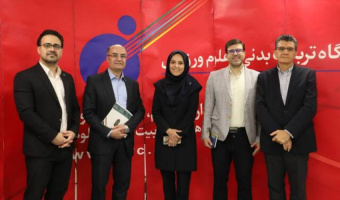
The final part of the meeting was dedicated to discussion and the exchange of specialized views among attendees. Public relations directors of participating sports sciences faculties and departments shared their lived experiences in the field of scientific communications and discussed ways to strengthen this national network. During this collective dialogue, the necessity of continuing these meetings to achieve a common language in introducing the country's scientific sports achievements was emphasized, so that henceforth, the sports sciences family, with a united voice and a more cohesive structure, can play its guiding role in advancing the health and sports of society. Additionally, Dr. Fariba Mohammadi honored the public relations colleagues of the Institute of Physical Education and Sports Sciences with plaques of appreciation and flowers.
Your Comment :